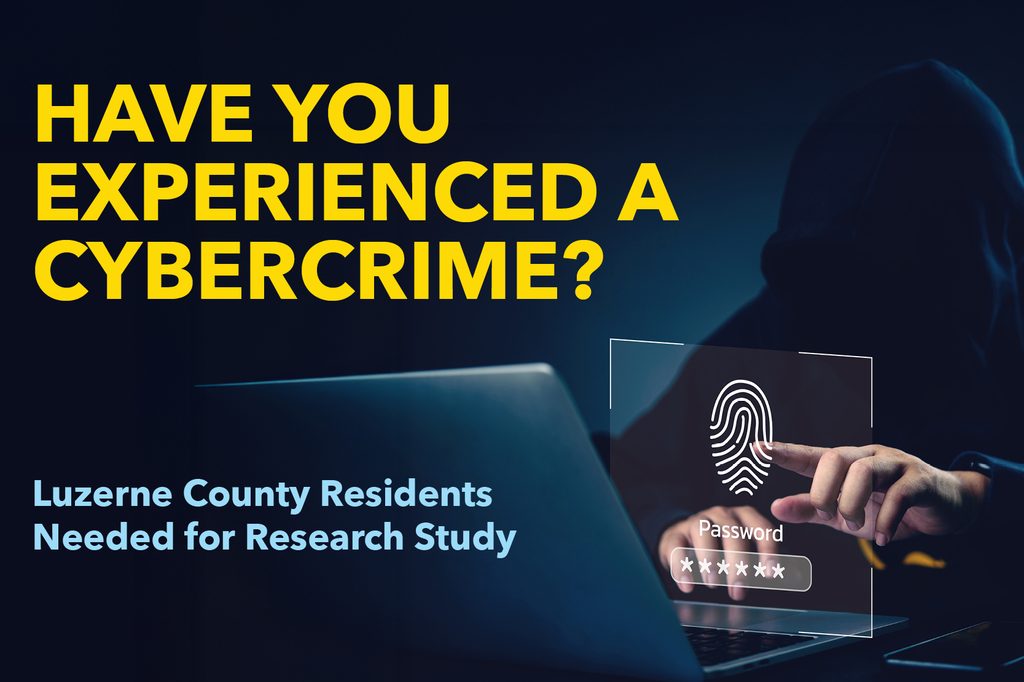
King’s College is inviting Luzerne County residents who have experienced cybercrime to share their stories through a research study aimed at improving victim support and local law enforcement response.
Led by King’s College assistant professor Sean Blinn, D.C.J., the study seeks at least 200 adults in Luzerne County who have experienced a cybercrime incident within the past five years. An anonymous online survey, available in English and Spanish, will let participants share their experiences and help inform recommendations to improve victim support.
“Many people encounter cybercrime without recognizing that their experience may qualify, particularly when an attempted scam does not result in a financial loss,” said Blinn. “We want to hear directly from residents about what happened, whether they sought help, and what support they needed. Their experiences can help identify ways to strengthen the response to cybercrime in our community.”
Eligible participants must be 18 or older, reside in Luzerne County, and have experienced a cybercrime incident within the last five years. Qualifying experiences may include attempts to harm or defraud someone online, even when those attempts were unsuccessful. Residents who have encountered attempted scams or fraudulent emails may qualify, even if they did not lose money or report the incident.
The survey asks about the nature of the incident, participants’ decisions about reporting it, and their satisfaction with any law enforcement response. Open-ended questions also allow participants to describe their experiences in their own words.
Despite the prevalence of cybercrime, limited research has examined how victims in small and mid-sized communities experience these offenses and seek assistance. The study aims to identify common victimization patterns, factors influencing reporting decisions, and barriers to accessing support.
Findings will help researchers develop victim-informed recommendations for improving communication, law enforcement training, victim support services, and community outreach. The research may help law enforcement agencies, policymakers, and community organizations strengthen their response to cybercrime.
Community organizations, municipal partners, and residents are encouraged to share the survey with eligible individuals.
To participate, visit the cybercrime victimization study survey.